Feature Communication Articles
- Articles Index
- Become A Brilliant Conversationalist: Using Probing Questions Guide
- Credibility: Knowing The Difference Between "Understanding From The Outside" and Understanding From The Inside
- Finding The Sweetspot Between Overly Positive and Overly Negative
- Communicating With Or Managing The Overly Positive Or Negative Employee
- Are YOU A Social Media Bore? Probably!
- Why Is There So Little Questioning Used In Social Media Conversations?
- When The People Who NEED The Feedback Are The Least Likely To "Hear" It
- Why I Don't Thank People For Leaving Comments On My Social Media Content
- Gallery: Graphic Meditations On Verbal Abuse and Verbal Violence
- When And How Praise Can Be Toxic
- It's Not What You Say. It's What You Do NOT Say That Makes a Huge Difference with Conflict and Communication
- Focus On Communication In The 2016 Presidential Campaign
- Improving Communication Via The "Less Is More" Principle
- NEW Instructional Video: Delivering Bad News And Minimizing Backlash
Communication Topics
- COMMUNICATION HOME
- The Power of Language Tutorials
- Communication General Questions
- Assertive Communication & Listening
- Communication Styles
- Practical Communication Techniques, Tips, and Advice
- Communication That Creates Conflict - Eliminating Firestarters
- Communicating With Groups and Public Speaking
- Non-Verbal and Paraverbal Communication
- Social Media & Technology
- Communication, learning from goofs, gaffs, and oopsies!
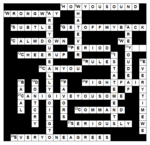
Relatiionship Killer Crossword Puzzle
Challenge yourself and learn about destructive communication with this unique free puzzle.
Interested in SMALL BUSINESS?
Visit our newly revamped Small Business Resource Center to learn about starting and sustaining a successful small business.Featured - Relationship Rescue!

Special Help: Learn To Communicate With Even The Most Upset People and Customers
.

Bacal nails it! While more are messing with the entanglements of Customer Satisfaction which leads to no where...he addresses the specifics head on and focuses on the greater picture and ultimate goal of the Customer Experience which leads to Loyalty. Excellent job! (Macy in Oklahoma, 2013)

One of the best things I learned from this book is how to turn a negative experience into a positive one. Using the tools from this gem of a book I have calmed people down, turned bad situations into good, and kept customers who would have otherwise left us and written ten nasty reviews in their wake. It is so empowering to be able to do that, rather than feel awful and abused. This is a must buy, must read for people who work with customers day in and day out. Do it for your own sanity, and to help improve your own job performance and satisfaction! (E. Meehan, California, 2012)
Anyone who serves the public should have this book. It gives advice for everyone from the order taker at the fast food restaurant to higher level management. It also gives different techniques for different situations (ie retail store, office, call center etc.) I have only had this book for a few weeks and already I have improved my customer service skills. It's a wonderful tool. (Lisa S. NJ)



Available As Instant Download At


Words don't mean the same thing to different people
What is assumption of common meaning and why is it a problem?
Some people believe that words mean the same thing for different people. After all, don't we have dictionaries so that people can have the same understanding of a word? This is a major problem in communication -- not realizing that language, any specific word, can have a different meaning for one person compared to another.
Here's an example. You are talking to someone who is considering buying a pet. For you the word "dog" has very positive meaning, since you had dogs all through childhood. So, you suggest to the person that he might buy a dog for companionship.
But does the word "dog" mean the same thing for the other person? That person may have been bitten by a large dog, when he was a child, and has developed a terror reaction to most dogs. For him, the meaning of the word "dog" (it's connotative meaning) is completely different from yours. If you are oblivious to the idea that words carry different emotional meanings, you and the other person can never learn to understand each other.
Even with seemingly straightforward word definitions, things aren't simple and we can't assume that when one person uses the word "liberal", for example, that they mean the same things as you might mean. For him, a liberal might mean a cowardly, crime coddling and socialistic thinking person, while for you, it might mean someone who believes that we should help those less fortunate.
The more heated and emotionallly loaded the words we are using, the more important it is to first try to understand what the other person means from the words he or she uses. Many arguments and conflicts can be prevented by trying to understand first, then "argue".